

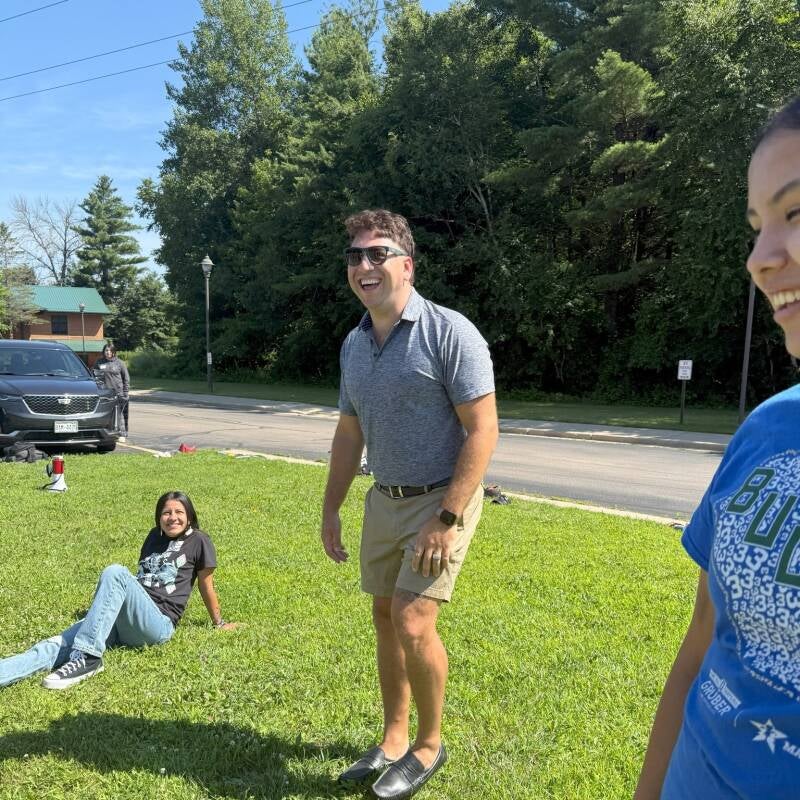
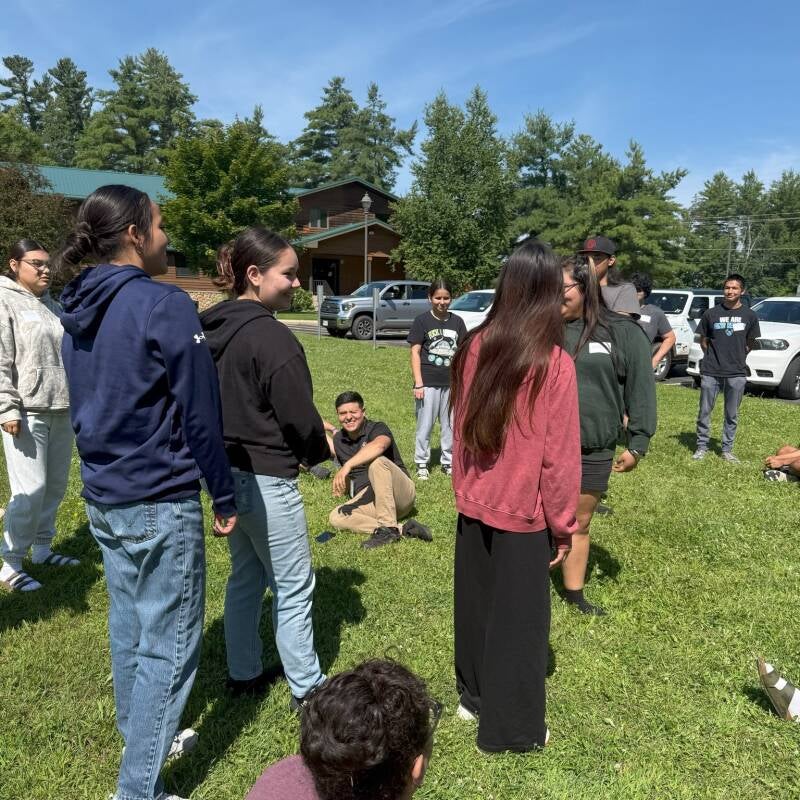
Around this time of year, many campuses are deep in planning their First-Year Experience (FYE) programs such as mapping out orientations, Week of Welcome events, and the countless details that shape a student’s earliest moments in college. These efforts are not simply logistical exercises. They are cultural and relational investments that influence how students see themselves, their campus, and their future. KEY POINT: This is the true introduction to a student on what it means to be a college student at your school! Mission, vision, values, tradition, etc.
FYE programs are more than a welcome. They are a foundation. The first weeks and months of college often shape a student’s sense of belonging, confidence, and long-term persistence. When institutions invest intentionally in the first year, they are not just planning events; they are shaping culture, connection, and student success from day one.
Belonging Must Be Intentional
Belonging does not happen by accident. It is designed, cultivated, and sustained through intentional choices made by institutions and individuals alike. My work is grounded in the Five Rs of Student Sense of Belonging, a framework that invites campuses to think relationally about how students experience connection, identity, community, and spaces on campus. When we talk about belonging out loud and when we name it and design for it, we give students language and permission to step into their communities more fully.
One of those Rs — Responsibility — is especially critical in the first year.
Responsibility as a Pathway to Belonging
In my research, 96% of participants referenced responsibility in some form when describing their sense of belonging (Rieth, 2023). Responsibility is not about pressure or perfection; it is about agency. It includes caring for oneself, engaging in spaces, fulfilling roles within organizations, and taking ownership of one’s learning and relationships.
A key dimension of responsibility is the willingness to actively seek out spaces where belonging can grow. One student, Owen, shared how he joined multiple groups and attended involvement fairs to discover communities that resonated with him. Carlos echoed this idea, explaining that stepping outside of one’s comfort zone was essential to finding connection. These stories reinforce a simple truth: belonging often begins with initiative (Rieth, 2023).
Students also spoke about personal accountability. McKenzie described the importance of exploring spaces until something felt right. Henry emphasized self-reliance and problem-solving. Emma framed it most directly: “You are responsible for this.” Her words reflect an understanding that belonging is not only something we receive — it is also something we build.
Responsibility extends beyond the self and into care for others. Maintaining friendships, showing up consistently, and investing time into relationships all contribute to deeper community. Belonging is both inward and outward; it requires tending to our own growth while also nurturing those around us.
Responsibility also appears in the roles students hold within teams, clubs, classrooms, and organizations. When students take ownership of their positions, groups thrive. In this way, responsibility becomes a stabilizing force like a rock shaped and strengthened over time providing grounding and growth within spaces of belonging.
My FYE Story
I often say that FYE holds a special place in my heart. It is where I first found my path into higher education at St. Norbert College, and it remains one of the areas of work that brings me the greatest joy. There is something incredibly powerful about meeting students at the very beginning of their journey and helping create environments where they can arrive fully as themselves.
One of my favorite things to share with incoming students is that the first year is often the first time they are truly on their own. It is a season of self-discovery. It is a chance to examine values, explore identity, and begin seeing the world from their own point of view. My first-year experience did exactly that for me.
Before college, I went by Ben… funny and odd right? When I arrived at St. Norbert a week early to participate in the S.T.A.R. Program (Students Taking Academic Responsibility) — a program designed to support first-year multicultural and first-generation students through weekly meals, tutoring, and community-building — everything began to shift. I met people quickly, built relationships, and found community in ways I had never experienced before.
One of the first icebreakers was simple: introduce yourself, and the group had to try to spell your name. In that moment, for the first time, I said “Benny.” I often think back and ask myself why. High school was not easy for me. I struggled with my Indigenous and queer identity, and college felt like an opportunity — an opening to rewrite my narrative and step into who I truly was meant to be. FYE programs at SNC gave me a new slate, new friendships, and space to become myself. This ice breaker also showed me how important and strong names can be to a person.
Within two months of being at SNC, I came out as a queer man. Two months! After living in my hometown for nearly fourteen years without feeling able to do so. What those first two months showed me was not just who I was, but who the institution was and how I could exist there as my full self.
This is where Responsibility became real for me. Campuses can create doorways, but students ultimately choose whether to walk through them. You can open opportunities, invite connection, and design meaningful programs but students also hold responsibility for stepping in, trying, and engaging. That can be difficult, vulnerable work. Which is why the first days and weeks matter so much.
During orientation programs, I introduce students to the Five Rs and remind them that a piece of belonging is in each student’s hands. Finding oneself in a college community can be beautiful, but it requires effort and courage. My work with institutions focuses on making that process easier and helping campuses intentionally design FYE cultures that do not just hint at belonging, but center it directly and boldly.
What This Means for FYE
For higher education professionals, the takeaway is clear: First-Year Experience programs are not about checking boxes or filling calendars. They are about equipping students with language, agency, and opportunity. When we intentionally design FYE initiatives that encourage exploration, responsibility, and relational connection, we help students understand that they are co-creators of their college experience.
When we get the first year right, we do more than welcome students. We change trajectories. We help them discover who they are, who they can become, and where they belong.
How I Partner with Campuses on First-Year Experience
Because FYE work is so personal to me, I intentionally partner with colleges and universities to design first-year experiences that move beyond programming and toward true belonging. My consulting focuses on both the student experience and the institutional culture that shapes it.
I support campuses through:
- Keynotes for Summer Orientation and Week of Welcome focused on belonging, identity development, and student agency
- Some of my popular FYE keynotes include:
- Be Curious, Be Brave, Be You
- Becoming Takes Time
- Try, Fail, Grow
- An Indigenous Student’s First Year
- Some of my popular FYE keynotes include:
- Workshops and storytelling sessions that introduce students to the Five Rs of Student Sense of Belonging and give them language for their transition
- Staff and faculty training on how to intentionally embed belonging into curriculum, advising, and co-curricular spaces
- Strategic consultation on creating cultures where students are not only welcomed, but empowered to take responsibility for their own sense of connection and growth
Strong First-Year Experience work is not about doing more, but it is about being more intentional. When campuses center belonging from day one, they create environments where students can thrive academically, socially, and personally. And when we do that well, we don’t just support a first year — we influence an entire college journey.
Rieth, B. C. (2023). The stories of space and student sense of belonging (Doctoral dissertation, New England College) [ProQuest LLC]. ERIC. https://eric.ed.gov/?id=ED640940
Add comment
Comments